English
 Français
 Español
 Nederlands



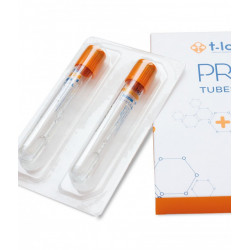
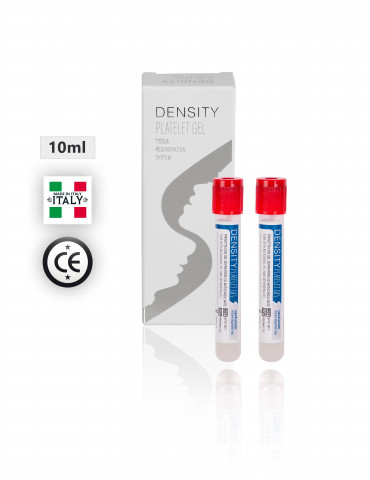
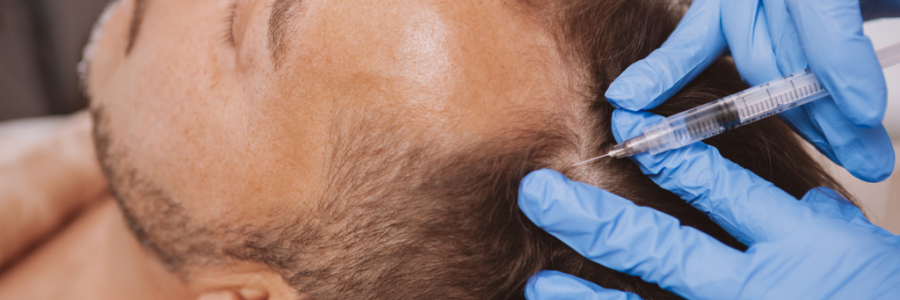
PRP and Androgenetic Alopecia - Protocol and Clinical Data
Platelet-rich plasma (PRP) injection into the scalp is a documented alternative to conventional treatments for androgenetic alopecia. The autologous protocol, well tolerated and compatible with associated treatments, is attracting growing interest in dermatology and aesthetic medicine.
Context: Limitations of Conventional Treatments
The reference treatments for androgenetic alopecia - topical minoxidil and oral finasteride - have known limitations. Minoxidil can cause headaches and hypertrichosis. Finasteride is associated with effects on libido and is contraindicated in pregnant women due to risks to foetal development. Neither molecule acts on follicular regeneration mechanisms.
Mechanism of Action of PRP on the Hair Follicle
Upon platelet activation, growth factors released by alpha granules act directly on dermal papilla cells:
- PDGF: stimulation of papilla cell proliferation and prevention of their apoptosis
- VEGF: perifollicular neovascularisation, improvement of local trophicity
- EGF: activation of the proliferative phase of the follicular cycle
- IGF-1: transdifferentiation of hair cells and production of new follicular units
Injection Protocol
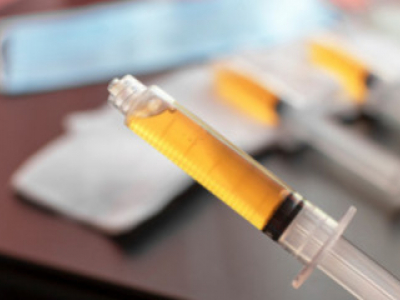
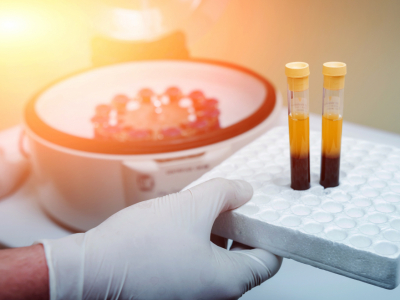
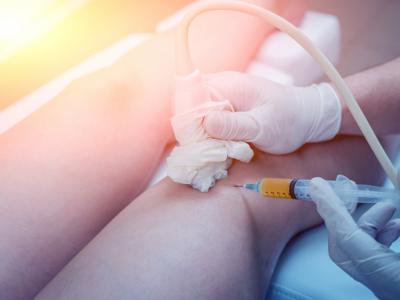
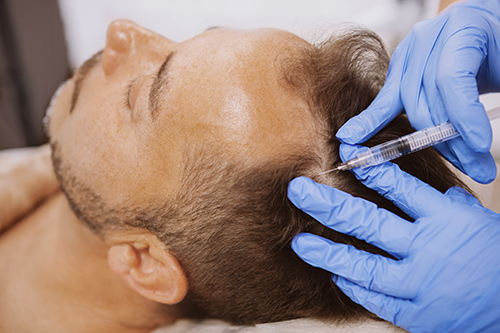
PRP is prepared by centrifugation of a 10 to 20 ml venous blood sample. After separation and activation, the platelet concentrate is injected into the scalp via intradermal micro-injections spaced approximately 1 cm apart, over the areas affected by hair thinning.
Standard Modalities
- 3 to 4 sessions spaced 4 to 6 weeks apart during the induction phase
- Maintenance sessions every 6 to 12 months depending on clinical response
- No local anaesthesia before injection (risk of impairing platelet function)
- Avoid NSAIDs in the days following injection
Follicular Density Data
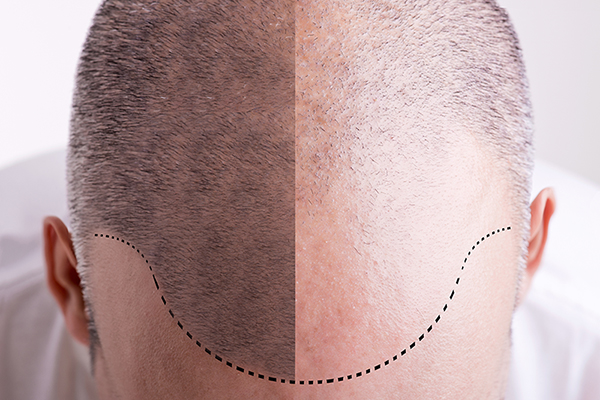
Comparative studies report a density of 18.7 follicular units/cm2 in treated areas versus 16.4 units/cm2 in control areas, representing a 15% increase in follicular density after PRP treatment.
US National Library of Medicine - National Institutes of Health Study
A study conducted by the US National Library of Medicine on 11 patients with androgenetic alopecia who were non-responders after 6 months of minoxidil or finasteride treatment evaluated the injection of 2 to 3 cc of PRP into the scalp every two weeks, over 4 sessions.
Results at 3 Months
- Significant reduction in hair loss between the 1st and 4th injection
- Mean number of hairs: from 71 to 93 follicular units
- Mean gain: 22.09 follicular units/cm2
Indication Profile
PRP injection for androgenetic alopecia represents a simple, minimally invasive and well-tolerated option, usable as monotherapy or in combination with existing topical treatments, in patients who are non-responders or who wish to avoid the side effects of conventional molecules.
Share this content
These products might interest you