English
 Français
 Español
 Nederlands



Bioinspired Hydrogel Coating
Introduction
Transcription of the article published in the journal Polymers on July 28, 2020.
Considering the potential of hydrogels to mimic the cellular microenvironment, methacryloyl gelatin (GelMA) and methacryloyl mucin (MuMA) were selected and compared as bioinspired coatings for commercially available polypropylene (PP) meshes for ventral hernia repair.
Materials and Methods
Thin and elastic layers of hydrated hydrogel were obtained through crosslinking photopolymerization after immobilizing derivatives on the surface of PP fibers. Fourier-transform infrared spectroscopy (FTIR) confirmed the success of the coating, while surface morphology and homogeneity were studied through scanning electron microscopy (SEM) and micro-computed tomography (micro-CT).
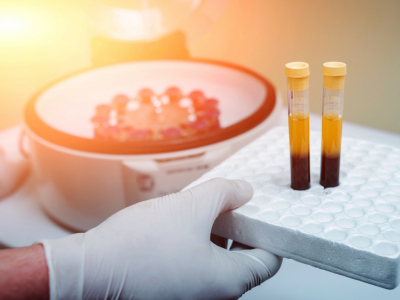
The stability of the hydrogel layers was assessed through biodynamic tests conducted on the coated meshes for seven days, followed by inspection of surface morphology by SEM and micro-CT. Considering that platelet-rich plasma (PRP) can enhance healing due to its high concentration of growth factors, this extract was used as a pre-treatment for hydrogel coating to further stimulate cellular interactions.
Results
The advanced characterization performed proved that GelMA and MuMA coatings can modulate the fibroblast response on PP meshes, either on their own or supplemented with a PRP extract as a blood-derived bioactivator. GelMA supported the better cellular response.
Conclusions
These findings can expand the applicative potential of functionalized gelatin, opening a new avenue in the research and engineering of a new generation of bioactive meshes.
Share this content
These products might interest you